Showing posts with label dog treats. Show all posts
Showing posts with label dog treats. Show all posts
Wednesday, August 29, 2018

Tuesday, April 3, 2018
Why I Love Making my Own Dog Treats
Most dog owners enjoy giving treats to their pets. Some may use them for rewards during training, while others simply love to give a treat to spoil their pet. There are many choices when it comes to buying dog treats and high quality treats can be very expensive. Recently, I started to make my own dog treats and found out it is very easy and inexpensive and my dogs love them. However, making my own treats isn’t just less expensive, it also offers me the opportunity to carefully choose the ingredients I want to use. I can even add herbs and oils that have holistic properties. If you would like to make your own dog treats, here are some tips to help you get started.

1. Choose Ingredients carefully
The beauty about making your dog treats at home is that you are able to carefully choose ingredients based on your dog’s preferences or food sensitivities.
Making your own treats is a great way to include vegetables and herbs you may otherwise not feed. I love making dog biscuits with shredded carrots and spinach. I use blue berries and yogurt in one of my dog treats and even made up a recipe for fresh breath cookies that includes mint and parsley!
If your dog has a food sensitivity, it is easy to substitute ingredients. I use brown rice flour in a lot of my recipes, which is a great substitute for wheat flour. I have used applesauce instead of eggs if a pet had reactions to eggs.

2. Add Natural Remedies to Heal
There are many ingredients that I use in my homemade dog treats that help with my dog’s health. For example, to help with arthritis I add turmeric to my dog treats, it has anti-inflammatory properties. You can also use flaxseed, as it also helps with inflammation, in addition to providing the needed nutrients for a healthy coat and skin.
If my dog has a stomach upset, or a spurt of diarrhea, I make some delicious dog biscuits with canned pumpkin. Pumpkin also helps with constipation.
When I want to use holistic oils, such as CBD oil, which helps with pain or anxiety, I choose a no-bake recipe to ensure the oil does not loose it’s effectiveness due to high temperatures in baking.

3. Avoid harmful ingredients
The benefit of homemade dog treats is that they contain no artificial flavors, chemicals or preservatives. Be sure to choose only dog-approved ingredients, and never use any ingredient that contains artificial sweeteners. Also some ingredients that are healthy for humans, such as garlic, are toxic for dogs, so be sure to research new ingredient before using them in your treats.
I make sure that I use only natural unsweetened applesauce in my recipes. Many regular applesauce may include sweeteners, which can be harmful to dogs. The same applies to peanut butter. PB is one of the most used ingredients in homemade dog treats. Be sure to use a natural peanut butter and never use anything that has the words “light” on it, as this is a sure indicator that the item was made with artificial sweetener.

4. Make small patches and store treats properly
Homemade dog treats are healthy and contain no preservative. It is therefore important to store them in an airtight container in your refrigerator or freeze them. I prefer to make smaller patches that I can use up within one of two weeks. Never leave your homemade dog treats at room temperature, as they will quickly mold!
 |
| visit our website for information on our books |
5. Have fun and think outside the box
Once I started making my own dog treats, I realized that there are a lot of great recipes available on the internet and I started to experiment with my own. There are many ways to spoil your dog, from making baked biscuits and non-bake treats to pupsicles, which are frozen dog treats. If you enjoy cooking or baking for your family, you will love making your own dog treats.
When I started to share my recipes online, through my blog, I got a lot of positive feedback and I published my own dog treat recipe book. Check out some of my previous posts for recipes:
Applesauce Cookies
Cheesy Spinach Cookies
Applesauce Cookies
Cheesy Spinach Cookies
By Birgit Walker
Birgit is the author of two books Chew On This - Homemade Dog Treat Recipes, and Keep Your Paws on the Road - A Practical Guide to Traveling with Dogs. She also writes a blog and offers a lively Facebook group that shares dog travel adventures. Visit her on her website at ModernCanineServices.com
Friday, January 19, 2018
Alternative Natural Herbal Supplements to Treat Pain and Inflammation in Your Dog
My sweet dog Jaeger is getting older. He is 12 now and has had some arthritis and joint pain. I have been giving him glucosamine and chondroitin supplements over the past years to help with these.

More recently, Jaeger was showing signs of increased pain and discomfort and I took him to the vet. The vet confirmed that Jaeger had arthritis and prescribed Carprofen, a non steroidal anti-inflammatory drug (NSAIDs). After just two days on this medication, I could tell Jaeger was not doing well. He became increasingly depressed, would hide in corners, and did not want to eat at all. I called the vet and he recommended we take Jaeger off the medication and see if the symptoms where caused by it or by the pain. Within a day of being off the medication, Jaeger became more alert and started to eat again. The vet suggested we try a different kind of medication, this time Meloxicam. Jaeger seemed to do better on the new medication. He was eating and drinking normally and had regular body functions. However, within being on the medication for 2 weeks, I noticed he was having difficulty walking. He seemed dazed and had a hard time getting up. He would wobble and could hardly assume the position to do his business. At times, he would walk someplace and then just stand there, as though he did not know what to do.
I decided to take Jaeger off the medication and within a few days, he was back to normal. Now it was clear to me that I had to find alternatives to NSAID medications for him. I began to research natural supplements and reached out on several online groups to see what others were doing for their dogs.
Curcumin is the chemical found in turmeric, that is the reason for the anti-inflammatory properties. When you look for supplements, the names turmeric and curcumin are often used interchangeably.
For more information on this amazing supplement and details about the Swiss research on it's effects on dogs, go to Springtime Inc: about-boswellia
CBD stands for cannabidiol and is a compound found in hemp. CBD is a cannabis compound that has significant medical benefits, but does not make people or animals feel “stoned.” Scientific and clinical research shows CBD as an alternative treatment for a wide range of conditions, including arthritis and chronic pain. To find out more about this amazing supplement online, go to Axis Hemp Company. The owner of Axis Hemp Company says: " CBD is a great source for aiding dogs with arthritis, we have seen the benefits for many pets after adding it as a supplement."

More recently, Jaeger was showing signs of increased pain and discomfort and I took him to the vet. The vet confirmed that Jaeger had arthritis and prescribed Carprofen, a non steroidal anti-inflammatory drug (NSAIDs). After just two days on this medication, I could tell Jaeger was not doing well. He became increasingly depressed, would hide in corners, and did not want to eat at all. I called the vet and he recommended we take Jaeger off the medication and see if the symptoms where caused by it or by the pain. Within a day of being off the medication, Jaeger became more alert and started to eat again. The vet suggested we try a different kind of medication, this time Meloxicam. Jaeger seemed to do better on the new medication. He was eating and drinking normally and had regular body functions. However, within being on the medication for 2 weeks, I noticed he was having difficulty walking. He seemed dazed and had a hard time getting up. He would wobble and could hardly assume the position to do his business. At times, he would walk someplace and then just stand there, as though he did not know what to do.
I decided to take Jaeger off the medication and within a few days, he was back to normal. Now it was clear to me that I had to find alternatives to NSAID medications for him. I began to research natural supplements and reached out on several online groups to see what others were doing for their dogs.
Alternative natural herbal supplements to treat pain and inflammation in dogs
Here are 4 alternative natural herbal supplements I have found. The most important aspect of these 4 is that they have no severe side effects. As with any new supplement, it is important to start with small quantities and to gradually increase the dose. Make sure you follow the dosage based on your dog's weight.1. Turmeric and Curcumin
Turmeric is a spice made from the turmeric plant and is the most widely used herb for arthritis and joint pain. It has been used in India for centuries to treat many ailments and has been studied in both humans and animals. It is an anti-inflammatory and also enhances circulation in the body. In addition, turmeric also benefits liver functions.Curcumin is the chemical found in turmeric, that is the reason for the anti-inflammatory properties. When you look for supplements, the names turmeric and curcumin are often used interchangeably.
2. Fish or Krill Oil
Fish oils are used for their high omega-3 content. They contain EPA and DHA, two essential fatty acids. Many people with arthritis take fish oil supplements. EPA is the ingredient that is the anti-inflammatory agent in fish oil. If you, like me, are concerned about the mercury, Krill oil may be a better option for your dog. Krill are a small shrimplike planktonic crusacean and are said to contain much less mercury. Their oil is equally high in the EPA and DHA.3. Boswellia
Boswellia is also known as Franincense. It is a resin extract from a tree bark. Research has shown that boswellic aids a normal inflammatory response by blocking enzymes that then inhibit the synthesis of leukotrienes. It has also been shown to support healthy cartilage in the joints.For more information on this amazing supplement and details about the Swiss research on it's effects on dogs, go to Springtime Inc: about-boswellia
4. CBD Tinctures
CBD stands for cannabidiol and is a compound found in hemp. CBD is a cannabis compound that has significant medical benefits, but does not make people or animals feel “stoned.” Scientific and clinical research shows CBD as an alternative treatment for a wide range of conditions, including arthritis and chronic pain. To find out more about this amazing supplement online, go to Axis Hemp Company. The owner of Axis Hemp Company says: " CBD is a great source for aiding dogs with arthritis, we have seen the benefits for many pets after adding it as a supplement."
Precautions
There are a lot of other natural supplements out there and I am still continuing to research them. As with any anti-inflammatory agent, remember that they prolong time it takes for the blood to clot, so if you give them to your pet, be sure to tell your veterinarian. If your dog is undergoing surgery, it is important to stop use of any anti-inflammatory treatment at least 5 days prior to the surgery!Disclaimer Statement:
This article includes information regarding supplements for dogs with arthritis or joint pain. I am not a veterinarian, nor do I claim to have any special knowledge of any of these products. I have used these supplements for my dog with positive results. I am not being paid, nor did I receive any free or discounted products to include them in my blog.Saturday, December 9, 2017
Homemade Dog Treat Recipe - Applesauce Cookies
Here is another easy to make dog treat recipe, just in time for the holidays!
The Applesauce Cookies aren't just yummy, but also healthy!
A short note about ingredients:
Make sure you use unsweetened applesauce and regular peanut butter. NEVER use "lite" or "sugar-free" peanut butter for your dog treats, as they contain artifical sweeteners that are toxic to dogs.
If your dog has a wheat sensitivity, use brown rice flour instead of wheat flour.


.

The Applesauce Cookies aren't just yummy, but also healthy!
A short note about ingredients:
Make sure you use unsweetened applesauce and regular peanut butter. NEVER use "lite" or "sugar-free" peanut butter for your dog treats, as they contain artifical sweeteners that are toxic to dogs.
If your dog has a wheat sensitivity, use brown rice flour instead of wheat flour.

Ingredients:
2 cups of oats
1 cup of whole wheat flour
1/2 cup peanut butter
1 cup of organic unsweetened applesauce
¼ cup coconut oil
1 teaspoon of baking powder

Directions:
Preheat oven to 350° F (176° C)
Combine all ingredients in a bowl and mix thoroughly.
Melt the coconut oil before adding it to the mixture.
Knead dough until smooth. Add additional applesauce if the
dough is too dry, or add additional flour if the dough is too
soft.
Roll dough to ¼ inch on floured surface, use cookie cutters to
make shaped cookies, or make small dough balls.
Arrange cookies on lined cookie sheet.
Bake for 20-30 minutes until lightly browned.

Let the treats cool off completely, before you feed them!
Remember homemade treats don't have any preservatives in them. You can store in airtight container for up to 2 weeks.
I hope you enjoy baking for your four-legged friends. Comment below if you like the post and let me know how your cookies turned out.
Until next time: Keep Your Paws on the Road!
Bee Walker
Tuesday, November 21, 2017
Homemade Dog Treats: Cheesy Spinach Cookies
So with the long holiday weekend coming up, I figure I will share one more dog treat recipe. This one is super easy to make, you will likely have all the ingredients in your home already.
Green Cheese Balls
🐾🐾🐾🐾🐾🐾🐾🐾🐾🐾🐾🐾🐾🐾🐾🐾


With about a tablespoon of dough, make dough balls. You can make smaller cookies for small dogs or larger treats for bigger dogs. I make mine different sizes, since I have 3 different size dogs.
Arrange treats on greased cookie sheet.

Bake for 20-30 minutes until lightly browned.
Green Cheese Balls
🐾🐾🐾🐾🐾🐾🐾🐾🐾🐾🐾🐾🐾🐾🐾🐾

Ingredients:
1 cup frozen spinach
1 cup oat meal
1 cup mozzarella cheese
1 cup of whole wheat flour
1 tablespoon coconut oil
water as needed

Directions:
Thaw out spinach.
Preheat oven to 350° F (176° C)
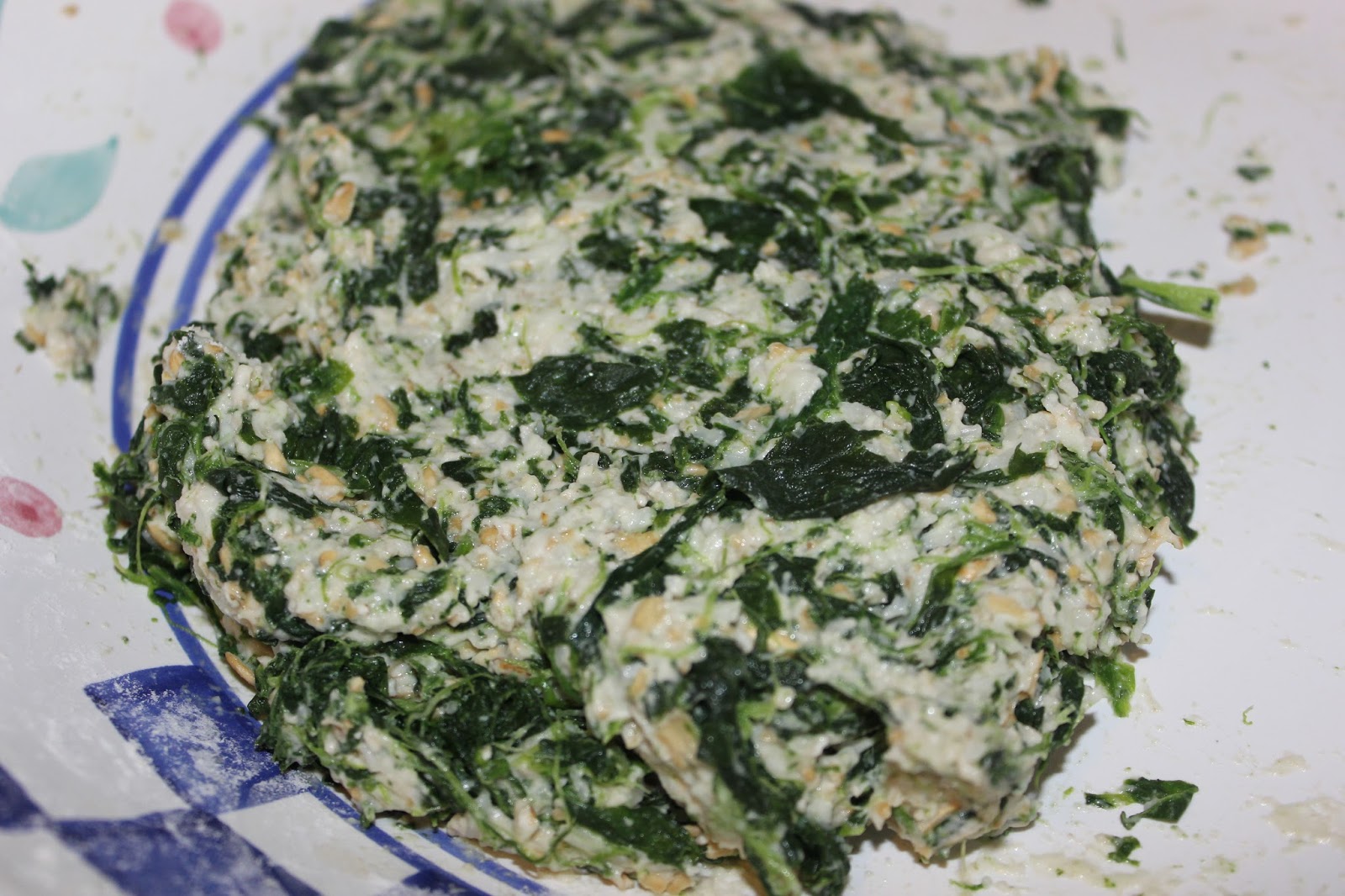
Combine all ingredients in bowl and mix well. Add the water slowly, as needed, to create a sticky dough
.
With about a tablespoon of dough, make dough balls. You can make smaller cookies for small dogs or larger treats for bigger dogs. I make mine different sizes, since I have 3 different size dogs.
Arrange treats on greased cookie sheet.

Bake for 20-30 minutes until lightly browned.
Let treats cool completely, before you feed them!
Store in airtight container for 1 week or freeze.
🐾🐾🐾🐾🐾🐾🐾🐾🐾🐾🐾🐾🐾🐾🐾🐾
🐾🐾🐾🐾🐾🐾🐾🐾🐾🐾🐾🐾🐾🐾🐾🐾
These are so yummy, I ate some of them myself before they cool of completely. The above amounts makes about 12 cookies.
I hope you enjoy baking for your dogs! Stop by for more pawlishes recipes soon.
Until next time: Keep Your Paws on the Road.
Bee
Friday, November 17, 2017
Pawlishes Thanksgiving Chew Stuffers for Your Dog
With Thanksgiving just around the corner, I thought I share one of my favorite dog treat recipes with you. This is a quick and easy way to make a chew toy or already eaten soup bone a more interesting chew toy. I call mine twice nice bones, since I use the eaten out marrow bones.
Once your dogs have chewed up and eaten out the marrow bones, you can fill them again and again with this easy to make stuffing. If you don't use soup bones for your dog, you can use the stuffing in any dog approved chew toy, like a Kong.

Ingredients:
4 ripe bananas (or a jar of organic banana baby food)
1/2 cup peanut butter
Preparations:
Peel and mash bananas (or use baby food). Mix with peanut butter until smooth.
Stuff mixture into hollow bones or other chew stuffer toys.
Freeze overnight.
Serve frozen treats.


For more homemade dog treat recipes, check out my previous posts:
homemade-pill-pockets-for-your-dog
3-favorite-homemade-dog-treat-recipes
Happy Thanksgiving to you and yours!
Thank you for stopping by, if you like the post, please leave comment below.
Until Next time: Keep Your Paws on the Road
Saturday, August 26, 2017
Happy National Dog Day 2017!
Today is National Dog Day - are you celebrating with your pet?
August 26, 2017 - what are your plans for making this a special day for your dog? Looking for things to do with your pet? Here are some ideas for making it the perfect celebration.
1. Get him a special treat
Dogs love treats. You can even let your dog pick out his own. Take Fido to the local pet store and see which treats he gravitates to. It's a good idea to try out different types of chew toys or chew foods for your dog. But don't let him touch all the food items in the shelves, once he had it in his mouth, you may have to buy it.

2. Make your own dog biscuit
Try out a new recipe for homemade dog treats. They are easy to make and you can be sure it has the best ingredients. You can make dog biscuits, dog ice cream, or even bake him a muffin. There are a lot of fun ways to make your own dog treats. See our previous blogs for some recipe ideas here.

3. Take him to the dog park or dog beach
Most dogs love to play with other dogs. Find a local dog park and let your Fido interact with some of his friends. Be sure your dog is up to date on all his vaccinations before you take him to such a public place. Our dogs love off leash parks and beaches.

4. Go for a walk or hike
If off-leash parks are not his thing, take your dog for a long walk or a hike. The most wonderful thing for any dog is to be with his owner. So whether it is National Dog Day, or any other day, enjoy time with your loving pet!
Monday, July 31, 2017
Crate Training 101: 5 Easy Steps to Make Your Dog Comfortable in the Crate or Pet Carrier
We highly recommend crate training for our customers. It can be very helpful during housebreaking, is needed when you want to transport your dog via airplane or train, and can be very useful for transporting your pet in the car. Another aspect of crate training is training a small dog to be comfortable in a pet carrier. In this blog post, we cover 5 easy steps to follow in the training process, so your dog learns to associate the crate, or the pet carrier with a comfortable place to be.
Training your dog to see the crate, or the carrier as a safe and comfortable place is very important. Follow the 5 easy exercises below, and your dog will learn to love the crate (carrier).

As with any training, make sure you set up a nurturing and supportive training environment. When you first introduce the crate, or the pet carrier, just allow the dog to explore it on his own terms. To do so, set up the carrier or crate inside your home, close to the area your dog normally sleeps. Put a used dog bed or blanket inside. Don't use a new one, because you want your dog's familiar smell inside the crate/carrier.
You can place a few of your dog's favorite treats near and inside the crate/carrier and allow the dog to sniff around it for the rest of the day.
Please do not lock your dog inside the crate or carrier right away. Leave the door open, so the dog can enter and exit on his own terms.
The next day, play a fun game with your dog by tossing her favorite toy inside the crate or carrier. If the dog is still hesitant to go inside the crate/carrier, place the toy just inside the entrance, so the dog only has to reach in. As she gets more comfortable, you can place the toy (or treat) further toward the inside of the crate/carrier until the dog is comfortable going in and out of the crate/carrier.
Use a command, like "kennel" every time you toss the toy or treat inside the carrier/crate. This will teach your dog to go into the crate/carrier on command. Don't push or physically drag your dog into the crate/carrier. Allow the dog to go in on her own terms.
Ensure the crate is not making a lot of noise. It is helpful to place it on a carpeted area, and for real timid dogs, take the door off completely in the first few stages of crate training.
After your dog is comfortable to walk in and out of the crate, start to feed him inside for several days in a row. Put his food in the far back of the crate/carrier. If you feed dry food, you can even put the food into the carrier or crate without a bowl. Don't place any water inside, it usually just makes a mess.
Please be sure to start your crate/carrier training early on. Give your pet several weeks before you actually travel with him in the crate/carrier. Now that he has eaten his meals inside the crate, you can start putting the door back on, and teach him to stay inside the crate/carrier for a few minutes at a time.
Say the command, and toss a treat inside the crate/carrier. Gently close the door when he is inside. Wait for a few moments, then let him come back out.

Start using the crate overnight, or when you leave the home for short periods of time. If you are training a dog to love the pet carrier, start taking your dog with you on short trips. Have her spend some time in the carrier while you carry it around. Remember, your dog will have to stay in the carrier for longer, if you will travel with her. Condition her to stay quiet and calm.
I hope the information provided is helpful to you or someone you know. Please share the post to your Facebook feed, and comment below on your experience with the pet carrier or crate.
Until next time: Keep Your Paws on the Road!
Bee
Training your dog to see the crate, or the carrier as a safe and comfortable place is very important. Follow the 5 easy exercises below, and your dog will learn to love the crate (carrier).

1. Start out on the Right Paw
As with any training, make sure you set up a nurturing and supportive training environment. When you first introduce the crate, or the pet carrier, just allow the dog to explore it on his own terms. To do so, set up the carrier or crate inside your home, close to the area your dog normally sleeps. Put a used dog bed or blanket inside. Don't use a new one, because you want your dog's familiar smell inside the crate/carrier.
You can place a few of your dog's favorite treats near and inside the crate/carrier and allow the dog to sniff around it for the rest of the day.
Please do not lock your dog inside the crate or carrier right away. Leave the door open, so the dog can enter and exit on his own terms.
2. Make it a Game
The next day, play a fun game with your dog by tossing her favorite toy inside the crate or carrier. If the dog is still hesitant to go inside the crate/carrier, place the toy just inside the entrance, so the dog only has to reach in. As she gets more comfortable, you can place the toy (or treat) further toward the inside of the crate/carrier until the dog is comfortable going in and out of the crate/carrier.
Use a command, like "kennel" every time you toss the toy or treat inside the carrier/crate. This will teach your dog to go into the crate/carrier on command. Don't push or physically drag your dog into the crate/carrier. Allow the dog to go in on her own terms.
Ensure the crate is not making a lot of noise. It is helpful to place it on a carpeted area, and for real timid dogs, take the door off completely in the first few stages of crate training.
3. Food makes the heart go fonder
After your dog is comfortable to walk in and out of the crate, start to feed him inside for several days in a row. Put his food in the far back of the crate/carrier. If you feed dry food, you can even put the food into the carrier or crate without a bowl. Don't place any water inside, it usually just makes a mess.
4. Positive association
Please be sure to start your crate/carrier training early on. Give your pet several weeks before you actually travel with him in the crate/carrier. Now that he has eaten his meals inside the crate, you can start putting the door back on, and teach him to stay inside the crate/carrier for a few minutes at a time.
Say the command, and toss a treat inside the crate/carrier. Gently close the door when he is inside. Wait for a few moments, then let him come back out.

5. Consistency over time teaches
Start using the crate overnight, or when you leave the home for short periods of time. If you are training a dog to love the pet carrier, start taking your dog with you on short trips. Have her spend some time in the carrier while you carry it around. Remember, your dog will have to stay in the carrier for longer, if you will travel with her. Condition her to stay quiet and calm.
I hope the information provided is helpful to you or someone you know. Please share the post to your Facebook feed, and comment below on your experience with the pet carrier or crate.
Until next time: Keep Your Paws on the Road!
Bee
Saturday, June 3, 2017
Can Fido fly? - Your Dog travels in the Cargo Hold
In my last blog, Travel by Airplane - Dogs that travel in the main cabin I discussed travel with your pet under 20 pounds, flying with you in the main cabin. In this blog, I want to continue providing information on Airline Travel with dogs.
If your pet is large and weighs in access of 18 pounds, he will need to fly in a crate as cargo.

Every airline has different procedures for dealing with pets. All that allow pets in their cargo hold will require that you have a IATA (International Air Transport Association) approved hard case pet carrier. There are also strict guidelines on the size of kennel for each dog. To measure your dog and make sure you purchase the correct size crate for him, follow the guidelines on the airlines website. I have decided not to include a sizing guide here, as different airlines have different requirements on their sizing.
Purchase the right Sky Kennel
The best source of information about traveling with a particular airline is their own website. They will have a page specifically for their requirements. You can print out the page and check off each requirement to make sure you understand and have the requirements that they need. Please be sure to carefully review your airlines pet policy and ask as many questions as you need answered to be clear about their guidelines. Once you know what size of crate your dog will need, you can purchase it at a local store or online. Most Airlines will require that the kennel is secured by wing nuts and screws, so be sure not to buy a crate that uses snaps. Kennels with snaps might open during travel and you definitely do not want that.
You can go to our website to find our favorite products for travel at www.moderncanineservices.com. Make sure you purchase the Sky Kennel in advance and allow some time to get your dog familiar with it. We recommend you remove the door and feed your dog inside the crate for several days to make him comfortable. It is also a good idea to allow him to sleep in the crate for several nights prior to your travel.
Required labeling
You are required to have information labels attached to your pet's crate for his safety. Do a web search or call your local Pet or Feed store and ask if they have any CS-345 Labels or “Live Animals” stickers. Tell them they go on your dog’s Crate for Airline shipping.
Federal regulations require that each kennel be properly labeled with the words "LIVE ANIMAL" on the top and at least one side of the kennel in 1-inch (2.5 cm) letters. The kennel must also have orientation labels. Indicate the top with arrows or "This End Up" on at least two sides.
You will also want to have labels with your dog’s name and your contact information. Be sure to put your mobile number, not your home phone, on the crate and also an address of another emergency contact, in case you cannot be reached.
In addition to the label, make sure your dog wears his collar with an ID tag. Double-check to verify that the number is your cell phone number and not your home number. It is also a very good idea to have your pet chipped.
In addition to the label, make sure your dog wears his collar with an ID tag. Double-check to verify that the number is your cell phone number and not your home number. It is also a very good idea to have your pet chipped.
During Flights
While cargo area is climate-controlled, temperatures can and do vary. Therefore airlines may deny pets traveling in the cargo hold during extreme cold or hot weather conditions. You don’t have to worry about air pressure. Every compartment of every plane is pressurized for safety. If your dog is particularly sensitive to temperature or has breathing issues, the cargo area may not be safe. Pets that are brachycephalic –those with short muzzles and flat, “snub noses,” such as boxers, pugs and bulldogs – are more susceptible to breathing problems, and may have a hard time adjusting to air pressure changes during flight. If you choose to fly with your snub-nosed pet, check with your airline, as some have banned brachycephalic pets completely from commercial flights.
Other considerations
IMPORTANT: Do not feed your animal in the two hours prior to departure, as a full stomach can cause discomfort for a traveling pet.
The airline will want to see your vaccine records and any additional paperwork required for traveling outside of the US. Be aware that in some countries bringing Fido may include a quarantine for your dog. If your flight has layovers, you will want to find out how the pet will be taken care off at the staging area between flights. We highly recommend to find the flight with the least legs, so there are less chances of your dog getting left at a baggage area or not being put on the same flight as you are.
Upon arrival at your final destination, you will usually pick up your dog in the over-sized baggage area, but it is a good idea to check with your airline upon check-in to clarify this procedure.
Your dog Flies WITHOUT you.
Make sure you ask: “Will my pet be traveling on the same plane as I am?”
This might seem like a silly question however the flight that you are taking might not be equipped for live animals, therefore they might put you and your dog on different flights.
Don’t assume that when you travel with your dog, your dog must travel at the same time as you do. That might not be the case. Sometimes having your dog travel to your destination before you arrive might be a good option. You might take a multiple stop flight that would be too long for your dog. Or you might be in too much of a hurry to get to the airport and trying to get your dog situated.
You can put your dog by himself on a flight to your destination and have someone at the other end pick him up. A lot of times you can find a better flight for your dog then you can for your dog and people. If you do not have someone that can go to the airport and pick up your dog for you, there are companies that can pick up your dog for you.
One option is find a full-service boarding kennel at the location that you are flying to. Many offer an airport pickup service. For a fee, they will go to the airport and pick up your pet on your behalf and take your pet back to the boarding kennel until you get there. Now all you have to do is fly to your destination and go pick up your pet and start your vacation.
Another option is a local pet sitting service, many will offer transportation for dogs. Research online for Pet services and call around to find the right service to get your pet pick-up at the destination airport.
I hope this information is helpful to you or someone you know. Please share my blog posts on your Facebook feed, or other social sites.
Until next time: Keep Your Paws on the Road.
Bee Walker
Modern Canine Services is a participant in the Amazon Services LLC Associates Program, an affiliate advertising program designed to provide a means for sites to earn advertising fees by advertising and linking to products on Amazon.
Tuesday, May 23, 2017
Dogs Travel by Airplane - Dogs that travel in the main cabin
Vacation time and travels are here and so I would like to offer a small excerpt from our book "Keep Your Paws on the Road".The book is soon to be published, and offers lots of valuable information on traveling with dogs.

Travel by Airplane - Dogs that travel in the main cabin
While every airline has different regulations, generally speaking, pets who weigh less than 20 pounds – pet carrier weight included – can travel in the cabin if the airline permits it. Your soft or hard case pet carrier must securely fit under the seat in front of you and is counted as one of your carry-ons. When you look to purchase your pet carrier, be sure to verify that it is airline approved, as there are lots of choices, but not all pet carriers meet the IATA requirement. You can go to our website and check out our recommended products in the travel essentials section. If your pet meets your airline’s criteria for traveling in the cabin, this is probably the best option for him.
Spending time in the pet carrier
Keep in mind that your dog must remain in the carrier for the entire flight. Your dog may whine or bark when confined in the carrier, especially when he can see you and is unsure why is his inside. We highly recommend that you get your dog used to the carrier weeks ahead of travel. You can use his bed and some toys and have him spend time in the crate while you watch TV or cook dinner. Use short periods of time to get him accustomed to the carrier.
After the initial crate training, make sure to have him spent time in it, while you carry him around. A good way to practice is to take him to restaurants or into stores with you. Practice with him staying in the crate for several hours at a time, since that will be the case during your flight time.
You can put a worn t-shirt in the bag with him, so he has your familiar smells with him to be comfortable.
Before you go on your flight, limit his food and fluid intake, so he will not need to go potty and won’t get motion-sick. You can talk to your veterinarian and see if the vet recommends a sedative for your dog to calm him during the travel time. If you have practiced being in the carrier prior to the flight, your dog should be fine.
Make sure you have his pet passport, and other documentation required. Have the dog collar with his ID tag on the dog and his leash handy, in case you want or need to take him out.
Security Checkpoint
After you have checked in for your flight, you and your dog will need to go through the airport security checkpoints.
You have two options to take your dog through the screening process. You can take him out of the carrier, and have the empty pet carrier go through the X-Ray belt, while you walk through the body scanner with your dog on-leash. Or leave your dog in the pet carrier and walk through the body scanner with him in it. If you leave him in the bag, TSA officials may ask to inspect the bag after you have been scanned.
To simplify the process, we recommend you have only few other carry-on items with you, so you have your hands free to handle the dog and the carrier.
In-flight
When you get to your seat on the aircraft, you can store the pet carrier under the seat right away, or keep the dog with the carrier on your lap until the flight attendants clear the cabin for take-off.
During the flight, you may want to interact with your dog. You can have the carrier on your lab during the flight, but your dog must remain contained in the carrier at all times. If you are tempted to open the carrier to give your dog a treat or pet him, do so carefully and only open the bag a little bit. You can give your dog a small ice cube, but again, don’t overdo it. The more you interact, the more likely he is wanting to come out. Just keep things calm and let Fido sleep in this carrier.
Connecting flights
If your flight is long and has several legs, you will have time in between your flights for Fido to come out of the crate in the airport area. If he has been confined for some time, the first order of business will be to give him an opportunity to relieve himself. Many airports have dog walking areas. However, going to the dog area usually requires for you to leave the secure gate area and to go back through security later. This may not be feasible if you have only little time between connections.
We find it is very beneficial to piddle pad train your dog, when you travel by airplane, since it allows you to stay within the secured area with your dog.
We hope you enjoyed this excerpt from our book. Check back for more information on traveling with your pets.
Thank you,
Bee
We hope you enjoyed this excerpt from our book. Check back for more information on traveling with your pets.
Thank you,
Bee
Modern Canine Services is a participant in the Amazon Services LLC Associates Program, an affiliate advertising program designed to provide a means for sites to earn advertising fees by advertising and linking to products on Amazon.
Thursday, April 20, 2017
Freshen you dog's breath with these homemade dog treats!
Most dogs have bad breath. I don't know if it is the things they eat or just the fact they don't brush their teeth, but I seldom meet a dog without bad breath.
There are a lot of products out there to help with the oral hygiene for your dogs, but here is one you can make yourself:
Parsley and Mint Dog Treats (breath fresheners)

Ingredients
-
2.5 cups whole wheat flour
-
1 cup water
-
1 T vegetable oil
-
1/2 cup quick oats
-
2 T fresh mint, chopped
-
1/3 cup fresh parsley, chopped
- 10-12 drops green food coloring
-
Preheat oven to 350 F and line a baking sheet with parchment paper.
-
In a bowl, combine the flour, oats, oil, water, and herbs. Mix well.
-
Add food coloring, then knead the dough until color is evenly dispersed.
-
Roll out the dough on parchment paper, using extra flour as needed so it doesn't stick.
-
Roll out about 1/4 to 1/2 thickness.
-
Use a cookie cutter to cut out shapes.
-
Place on lined baking sheet and bake for 35 minutes.
- Let treats cool before serving.
- Treats may be stored in an air tight container for 2 weeks, or in the freezer for up to 3 months.
- I would love to hear your comments and feedback regarding our homemade dog treats. Please comment below, or share the post on your FB page!
- Until next time; Keep Your Paws on the Road!
- Bee
Modern Canine Services is a participant in the Amazon Services LLC Associates Program, an affiliate advertising program designed to provide a means for sites to earn advertising fees by advertising and linking to products on Amazon.
Subscribe to:
Posts (Atom)
-
 With the summer vacation time approaching, you are planning your next getaway and may want to take your dog with you. Statistics show mor...
-
 As the owner of a pet waste removal company, people often ask me why I got into the business. I usually just say that I love dogs and I saw...
-
 Our senior dog Jaeger has arthritis in his front legs, so he gets turmeric and yucca powder to help with the inflammation. I also have him...
-
 Just a few more days and it's the 4th of July! Everyone around the US is looking for some way to enjoy the holiday. Whether you plan a g...
-
 It is so heartbreaking, I see so many Facebook posts on lost pets every day. Thank goodness many dog owners now have their pets mic...
-
 With summer vacations at it’s peak, I decided to interview a few Canine Travel Experts. I've asked them to tell me about their mai...
-
 A Guest Blog by TeriAnn Tate I’m sure you’re all saying, “ poisonous t oads in Arizona and Southern California….whatcha talking about...
-
 So it's been hot here in Arizona! The long summer months make it hard to do things with your dog. If you want to take your four-legged b...
-
 You leave your house and your dog is barking up a storm and won’t stop all day. You come home after work and your dog has destroyed the b...
-
 My sweet dog Jaeger is getting older. He is 12 now and has had some arthritis and joint pain. I have been giving him glucosamine and chondro...